Dans de nombreuses entreprises, la volonté d’agir en faveur de l’inclusion est bien présente. Mais lorsqu’il s’agit de passer à l’action, une question revient systématiquement : comment accompagner concrètement les équipes au quotidien ?
Managers, responsables RH et collègues se retrouvent souvent démunis. Peur de mal faire, méconnaissance du handicap, manque de temps ou d’expérience : ces freins, largement documentés par les acteurs institutionnels, ralentissent encore l’intégration durable des personnes en situation de handicap.
Un constat partagé par les acteurs de l’emploi
Selon les données de France Travail, les demandeurs d’emploi en situation de handicap rencontrent davantage de difficultés d’accès à l’emploi et restent inscrits plus longtemps que le tout public. Cette situation s’explique en partie par une inadéquation entre les besoins des entreprises et les modalités d’accompagnement proposées.
Du côté des entreprises, l’Agefiph souligne régulièrement que les freins à l’embauche ne sont pas uniquement liés aux compétences, mais aussi à l’organisation du travail, au management et à l’accompagnement des équipes. Autrement dit : sans soutien opérationnel, l’inclusion repose trop souvent sur la bonne volonté individuelle.
Accompagner les équipes : un levier clé de réussite
L’intégration réussie d’une personne en situation de handicap ne dépend pas uniquement de son poste ou de ses compétences techniques. Elle repose sur un écosystème : managers formés, équipes sensibilisées, cadre sécurisant et interlocuteurs identifiés.
C’est précisément à ce niveau qu’intervient Handiwork.
Handiwork : un tiers de confiance au cœur de l’entreprise
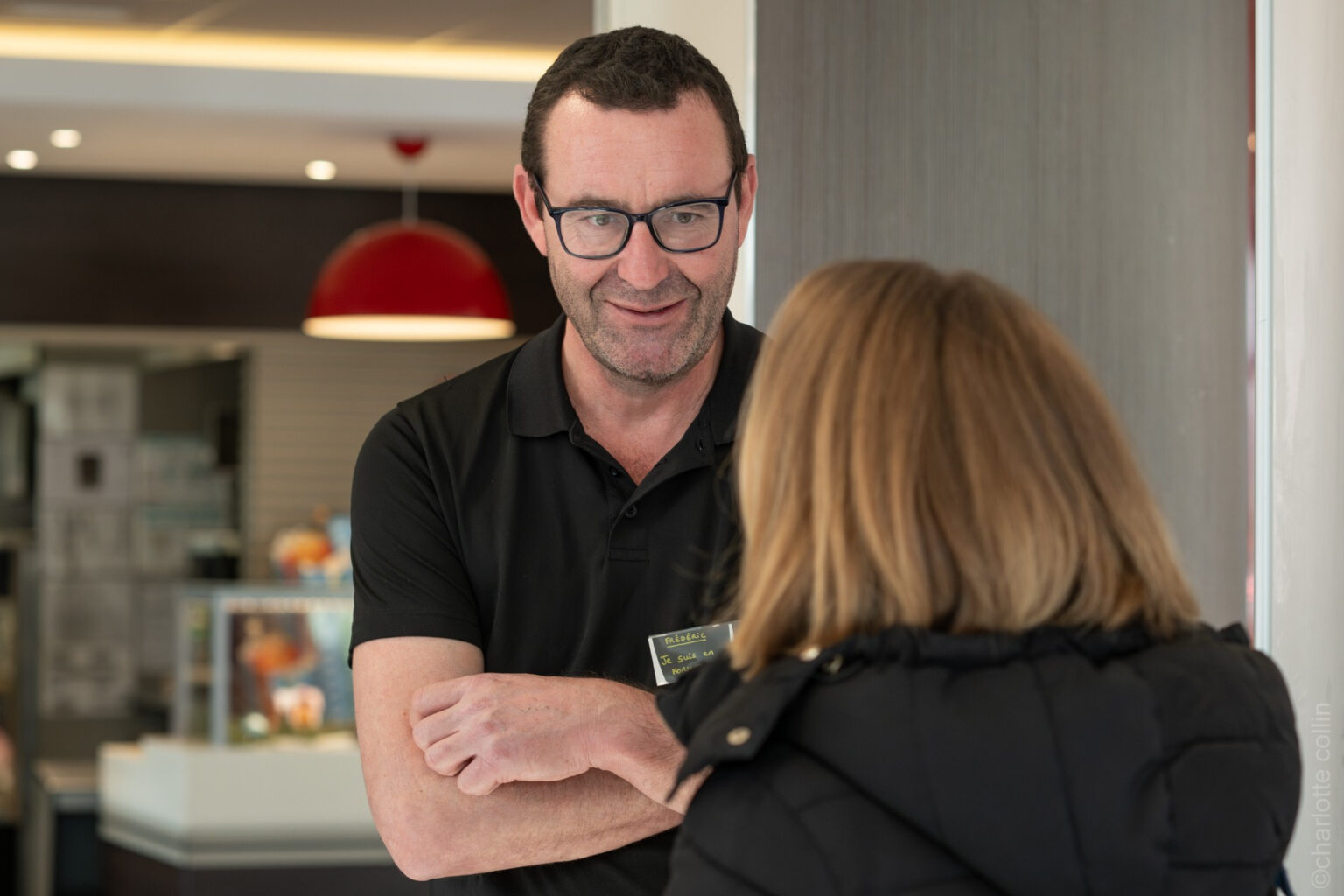
Sur les dispositifs Handiwork Recrutement et Handiwork Découverte, toute une équipe opérationnelle encadre la mise en place du parcours de formation et son suivi. De plus, le formateur Handiwork est présent directement sur le lieu de travail et son rôle va bien au-delà de la transmission de compétences métiers.
Il agit comme un tiers de confiance, à la fois pour :
Cette présence terrain permet de lever rapidement les incompréhensions, d’ajuster les pratiques et de sécuriser les parcours. L’accompagnement devient collectif, et non plus individuel.
Des résultats concrets sur le terrain
Cette approche porte ses fruits. En 2025 :
Sur les dispositifs de recrutement, cet accompagnement renforcé se traduit par un taux d’embauche moyen de 60 %, dont 80 % en CDI.
Former les équipes, pas seulement recruter
Les données de l’Agefiph le confirment : les entreprises qui investissent dans l’accompagnement et la formation des équipes sécurisent davantage leurs recrutements et favorisent le maintien dans l’emploi.
Former en situation de travail, accompagner les managers, sensibiliser les collectifs : ce triptyque est au cœur de la méthode Handiwork. Il permet de transformer l’inclusion en un projet d’équipe, intégré au fonctionnement quotidien de l’entreprise.
Conclusion : l’inclusion se construit au quotidien
Accueillir une personne en situation de handicap ne se résume pas à une embauche. C’est un processus qui s’inscrit dans la durée et qui nécessite des outils, des compétences et un accompagnement adapté.
Avec Handiwork, les entreprises ne sont pas seules. Elles s’appuient sur une expertise de terrain, une présence opérationnelle et une méthode éprouvée pour faire de l’inclusion une réussite collective.
We firmly believe that the internet should be available and accessible to anyone, and are committed to providing a website that is accessible to the widest possible audience, regardless of circumstance and ability.
To fulfill this, we aim to adhere as strictly as possible to the World Wide Web Consortium’s (W3C) Web Content Accessibility Guidelines 2.1 (WCAG 2.1) at the AA level. These guidelines explain how to make web content accessible to people with a wide array of disabilities. Complying with those guidelines helps us ensure that the website is accessible to all people: blind people, people with motor impairments, visual impairment, cognitive disabilities, and more.
This website utilizes various technologies that are meant to make it as accessible as possible at all times. We utilize an accessibility interface that allows persons with specific disabilities to adjust the website’s UI (user interface) and design it to their personal needs.
Additionally, the website utilizes an AI-based application that runs in the background and optimizes its accessibility level constantly. This application remediates the website’s HTML, adapts Its functionality and behavior for screen-readers used by the blind users, and for keyboard functions used by individuals with motor impairments.
If you’ve found a malfunction or have ideas for improvement, we’ll be happy to hear from you. You can reach out to the website’s operators by using the following email
Our website implements the ARIA attributes (Accessible Rich Internet Applications) technique, alongside various different behavioral changes, to ensure blind users visiting with screen-readers are able to read, comprehend, and enjoy the website’s functions. As soon as a user with a screen-reader enters your site, they immediately receive a prompt to enter the Screen-Reader Profile so they can browse and operate your site effectively. Here’s how our website covers some of the most important screen-reader requirements, alongside console screenshots of code examples:
Screen-reader optimization: we run a background process that learns the website’s components from top to bottom, to ensure ongoing compliance even when updating the website. In this process, we provide screen-readers with meaningful data using the ARIA set of attributes. For example, we provide accurate form labels; descriptions for actionable icons (social media icons, search icons, cart icons, etc.); validation guidance for form inputs; element roles such as buttons, menus, modal dialogues (popups), and others. Additionally, the background process scans all the website’s images and provides an accurate and meaningful image-object-recognition-based description as an ALT (alternate text) tag for images that are not described. It will also extract texts that are embedded within the image, using an OCR (optical character recognition) technology. To turn on screen-reader adjustments at any time, users need only to press the Alt+1 keyboard combination. Screen-reader users also get automatic announcements to turn the Screen-reader mode on as soon as they enter the website.
These adjustments are compatible with all popular screen readers, including JAWS and NVDA.
Keyboard navigation optimization: The background process also adjusts the website’s HTML, and adds various behaviors using JavaScript code to make the website operable by the keyboard. This includes the ability to navigate the website using the Tab and Shift+Tab keys, operate dropdowns with the arrow keys, close them with Esc, trigger buttons and links using the Enter key, navigate between radio and checkbox elements using the arrow keys, and fill them in with the Spacebar or Enter key.Additionally, keyboard users will find quick-navigation and content-skip menus, available at any time by clicking Alt+1, or as the first elements of the site while navigating with the keyboard. The background process also handles triggered popups by moving the keyboard focus towards them as soon as they appear, and not allow the focus drift outside it.
Users can also use shortcuts such as “M” (menus), “H” (headings), “F” (forms), “B” (buttons), and “G” (graphics) to jump to specific elements.
We aim to support the widest array of browsers and assistive technologies as possible, so our users can choose the best fitting tools for them, with as few limitations as possible. Therefore, we have worked very hard to be able to support all major systems that comprise over 95% of the user market share including Google Chrome, Mozilla Firefox, Apple Safari, Opera and Microsoft Edge, JAWS and NVDA (screen readers).
Despite our very best efforts to allow anybody to adjust the website to their needs. There may still be pages or sections that are not fully accessible, are in the process of becoming accessible, or are lacking an adequate technological solution to make them accessible. Still, we are continually improving our accessibility, adding, updating and improving its options and features, and developing and adopting new technologies. All this is meant to reach the optimal level of accessibility, following technological advancements. For any assistance, please reach out to